
一次使用命名管道与epoll的踩坑记录
Ryan 12/8/2023
笔者最近在写一个视频转码和压缩的服务,其中还包含了对于错误的文件进行修复的模块,其中包含一个服务端,它包含了几乎所有这个服务的功能。还包含了一个客户端工具,用来向服务端提交数据。因为这个服务的客户端和服务端是部署在同一台机器上的,所有这里我采用了命名管道来进行通信。
一开始我自测还是很顺利的,但是当我写了一个脚本提交了10000的任务后,整个服务就卡住了。这里我来写一个案例来复线这个Bug
# 服务端
#include <asm-generic/errno-base.h>
#include <stdio.h>
#include <stdlib.h>
#include <unistd.h>
#include <fcntl.h>
#include <sys/types.h>
#include <sys/stat.h>
#include <string.h>
#include <sys/epoll.h>
#include <sys/stat.h>
#include <errno.h>

#define FIFO_PATH "/tmp/mytest_fifo"
#define MESSAGE "Hello, world!"
#define MAX_EVENTS 10

static int volatile count = 0;

int main()
{
    int fd, epoll_fd, events_count, read_bytes;
    struct epoll_event event, events[MAX_EVENTS];
    int packet_len = strlen(MESSAGE) + 1;
    char buffer[64] = {0};

    mkfifo(FIFO_PATH, 0666);

    fd = open(FIFO_PATH, O_RDWR | O_NONBLOCK);
    if (fd == -1)
    {
        perror("open");
        exit(EXIT_FAILURE);
    }

    epoll_fd = epoll_create1(0);
    if (epoll_fd == -1)
    {
        perror("epoll_create1");
        exit(EXIT_FAILURE);
    }

    event.events = EPOLLIN | EPOLLET;
    event.data.fd = fd;
    if (epoll_ctl(epoll_fd, EPOLL_CTL_ADD, fd, &event) == -1)
    {
        perror("epoll_ctl");
        exit(EXIT_FAILURE);
    }

    printf("Server waiting for clients...\n");

    ssize_t bytes_read = 0;
    size_t total_bytes_read = 0;
    while (1)
    {
        events_count = epoll_wait(epoll_fd, events, MAX_EVENTS, -1);
        if (events_count == -1)
        {
            perror("epoll_wait");
            exit(EXIT_FAILURE);
        }

        for (int i = 0; i < events_count; ++i)
        {
            if (events[i].events & EPOLLIN)
            {
                while (total_bytes_read < packet_len)
                {
                    bytes_read =
                        read(events[i].data.fd, buffer + total_bytes_read,
                             packet_len - total_bytes_read);
                    if (bytes_read <= 0)
                    {
                        if (errno == EAGAIN || errno == EINTR ||
                            errno == EWOULDBLOCK)
                        {
                            continue;
                        }

                        printf("error read from fifo deu to:%s\n",
                               strerror(errno));
                        break;
                    }

                    total_bytes_read += bytes_read;
                }

                printf("read from client :%s %d\n", buffer, count++);
                total_bytes_read = 0;
            }
        }
    }

    close(fd);
    close(epoll_fd);
    unlink(FIFO_PATH);

    return 0;
}
1
2
3
4
5
6
7
8
9
10
11
12
13
14
15
16
17
18
19
20
21
22
23
24
25
26
27
28
29
30
31
32
33
34
35
36
37
38
39
40
41
42
43
44
45
46
47
48
49
50
51
52
53
54
55
56
57
58
59
60
61
62
63
64
65
66
67
68
69
70
71
72
73
74
75
76
77
78
79
80
81
82
83
84
85
86
87
88
89
90
91
92
93
94
95
96
97
98
99
100
2
3
4
5
6
7
8
9
10
11
12
13
14
15
16
17
18
19
20
21
22
23
24
25
26
27
28
29
30
31
32
33
34
35
36
37
38
39
40
41
42
43
44
45
46
47
48
49
50
51
52
53
54
55
56
57
58
59
60
61
62
63
64
65
66
67
68
69
70
71
72
73
74
75
76
77
78
79
80
81
82
83
84
85
86
87
88
89
90
91
92
93
94
95
96
97
98
99
100
# 客户端
#include <errno.h>
#include <stdio.h>
#include <stdlib.h>
#include <unistd.h>
#include <fcntl.h>
#include <sys/types.h>
#include <sys/stat.h>
#include <string.h>

#define FIFO_PATH "/tmp/mytest_fifo"
#define MESSAGE "Hello, world!"
static int volatile count = 100000;

int main()
{
    int fd;

    fd = open(FIFO_PATH, O_WRONLY);
    if (fd == -1)
    {
        perror("open");
        exit(EXIT_FAILURE);
    }

    while (count > 0)
    {
        ssize_t bytesWritten = write(fd, MESSAGE, strlen(MESSAGE) + 1);
        if (bytesWritten == -1)
        {
            printf("write error:%s\n", strerror(errno));
            exit(EXIT_FAILURE);
        }

        printf("write %d hello msg to server\n", 100000 - count);
        count--;
    }

    close(fd);
    return 0;
}
1
2
3
4
5
6
7
8
9
10
11
12
13
14
15
16
17
18
19
20
21
22
23
24
25
26
27
28
29
30
31
32
33
34
35
36
37
38
39
40
2
3
4
5
6
7
8
9
10
11
12
13
14
15
16
17
18
19
20
21
22
23
24
25
26
27
28
29
30
31
32
33
34
35
36
37
38
39
40
我来整体描述一下这个demo做的事情:
- 服务端会在一开始打开一个非阻塞的FIFO,将fd塞到一个epoll event中,后面就是正常读取消息,这里我强制服务端每次读一整个message,长度是固定的(
strlen(MESSAGE)+1)。 - 客户端就正常得打开命名管道,然后while
10000次向server发送Hello, world!。
当这个demo跑起来后很容易就能复现前面说的那个bug。如下图:
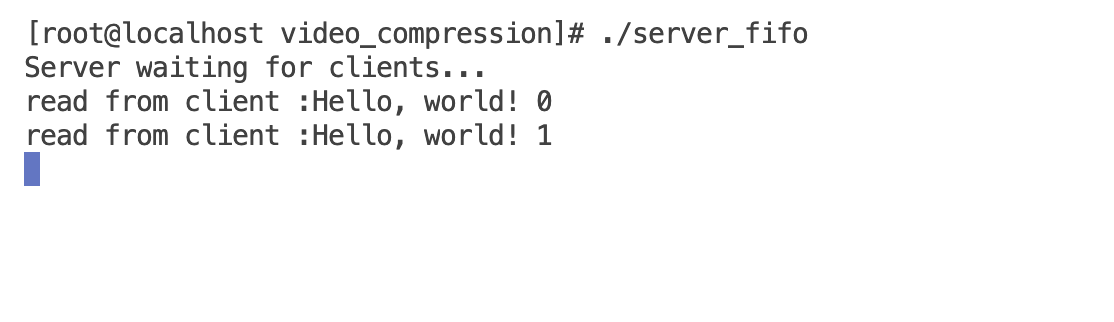
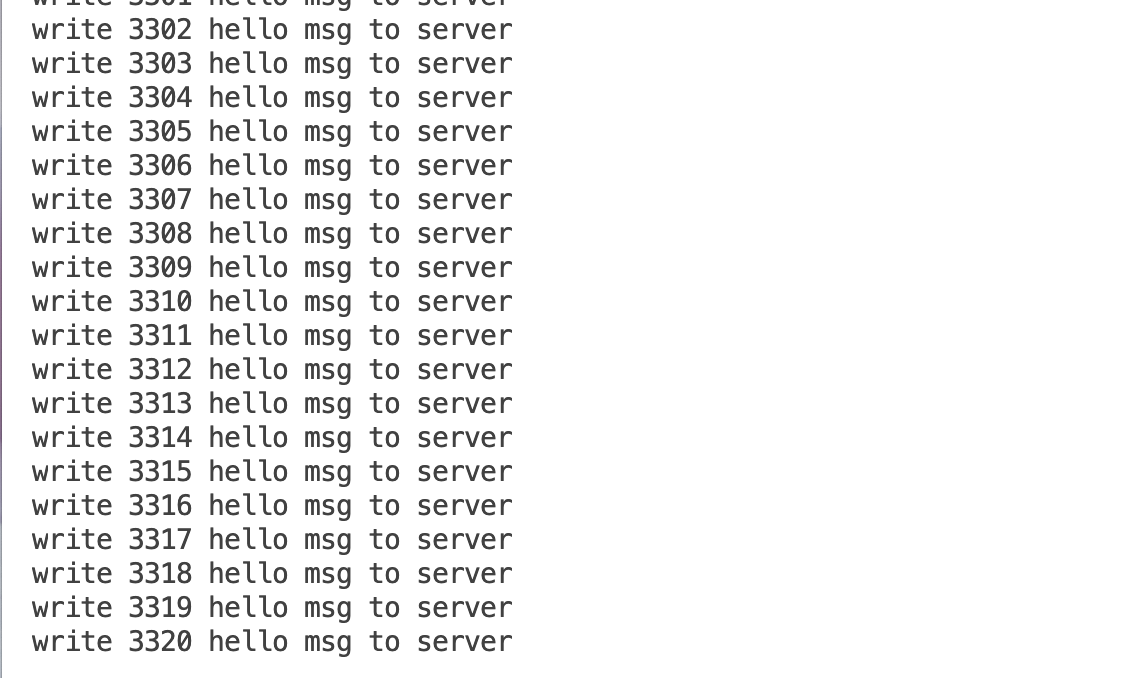
服务端只读了四个消息后就stack住了,反观客户端,发送了上千条消息后也同样卡住了。
我们用Strace来去启动这两个服务来看一下、他俩hang在了什么地方:
